birds nest fern crown rot Asplenium nidusAsplenium nidus Asplenium nidus is the classic birds nest fern, grown for its wide, glossy fronds and open vase shaped rosette. The fronds rise from a central crown, then arch outward into a smooth green funnel. The species has simple strap shaped fronds with a strong midrib. Mature plants become broader over time as outer fronds lengthen and arch farther from the crown, especially when the crown stays clean and the roots have an airy, moisture
Asplenium nidus
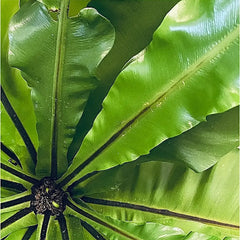
Asplenium nidus is the classic bird’s nest fern, grown for its wide, glossy fronds and open vase-shaped rosette. The fronds rise from a central crown, then arch outward into a smooth green funnel.
The species has simple strap-shaped fronds with a strong midrib. Mature plants become broader over time as outer fronds lengthen and arch farther from the crown, especially when the crown stays clean and the roots have an airy, moisture-retentive substrate.
Asplenium nidus key features
- Accepted Asplenium species in the Aspleniaceae family
- Large, simple, glossy fronds with a defined central midrib
- Epiphytic or lithophytic fern from wet tropical habitats
- Rosette growth creates the bird’s nest form at the centre
- Best grown warm, evenly moist and out of harsh direct sun
Asplenium nidus range and rosette growth
Asplenium nidus is native from Malesia to northern and northeastern Queensland, where it grows mainly in wet tropical conditions as an epiphyte or lithophyte. It roots into organic material on trees, rocks and humid forest surfaces, so potted plants need an airy, moisture-retentive root zone rather than compact soil.
The nest-shaped crown is central to the plant’s growth. In habitat, falling organic matter and moisture gather around the rosette over time. Indoors, the crown should stay visible and airy, while the substrate provides consistent moisture and drainage around the roots.
Asplenium nidus care indoors
-
Light: Give bright indirect to medium filtered light. Strong sun can mark the broad fronds, while very dark corners slow new growth.
-
Watering: Keep the potting mix lightly moist, watering when the top layer starts to lose moisture. Aim water at the substrate edge around the crown.
-
Substrate: Use an open mix with fine bark, coco fibre, perlite and a small amount of moisture-holding organic matter. An open mix reduces wet-root stress around the root mass.
-
Humidity: Maintain moderate to high humidity as new fronds expand. A humidifier, grouped plants or a bright cabinet reduces dry frond tips during dry indoor periods.
-
Temperature: Keep warm and stable, ideally around 18–26 °C. Protect from cold drafts and cold wet substrate.
-
Feeding: Feed gently during active growth with a diluted fertiliser. Excess fertiliser can mark frond tips and stress fern roots.
-
Pot choice: Choose a pot with drainage and enough width for the rosette. Keep the crown slightly above the mix.
-
Repotting: Repot when roots fill the pot or the substrate collapses. Set the crown visibly above the fresh mix.
-
Pruning: Remove old outer fronds at the base with clean scissors. New fronds emerge from the centre and should be left untouched while soft.
Asplenium nidus problem signs
-
Brown frond tips: Check humidity, watering consistency, fertiliser strength and mineral residue from hard water.
-
Crown rot: Water may be collecting in the centre. Improve airflow, keep the crown clear and water the substrate edge.
-
Wrinkled or dull fronds: The plant may be drying too deeply or receiving hot airflow. Rehydrate gradually and stabilise the growing spot.
-
Pale patches: Light may be too intense. Move the plant back from direct sun and check that fronds are not touching hot glass.
Asplenium nidus growing notes
New fronds appear from the central crown and mature outward into a wider vase shape. Dust can settle on the broad fronds, so wipe mature fronds gently with a soft damp cloth. Mature outer fronds can arch widely, so give the plant enough space around the pot.
Asplenium nidus household safety
Asplenium nidus is generally treated as a non-toxic ornamental fern. Keep it away from heavy chewing, and skip chemical leaf-shine products on the fronds.
Asplenium nidus name meaning and fern background
Asplenium comes from the historic spleenwort name. The species epithet nidus means nest in Latin, referring to the rosette shape that gives the bird’s nest fern its common name. Asplenium nidus L. was published by Linnaeus in Species Plantarum in 1753.
 ,
,
 and
and

 Promo Codes Available: